MOTS-c
MOTS-c (Mitochondrial ORF of the 12S rRNA type-c)
MOTS-c is a 16-amino-acid peptide encoded not in the nuclear genome but within the mitochondrial genome, in a short open reading frame inside the gene for 12S ribosomal RNA. Its discovery by Lee and colleagues, published in Cell Metabolism in 2015, helped establish the class of mitochondrial-derived peptides (MDPs), which also includes humanin.
The finding was significant because it showed mitochondria can send peptide signals to the rest of the cell and potentially to other tissues. In the original study and follow-up work, MOTS-c was reported to regulate the folate-methionine cycle and activate AMP-activated protein kinase (AMPK), a central cellular energy sensor, in cell culture and mouse models. Later research reported that under metabolic stress it can move into the nucleus and influence gene expression.
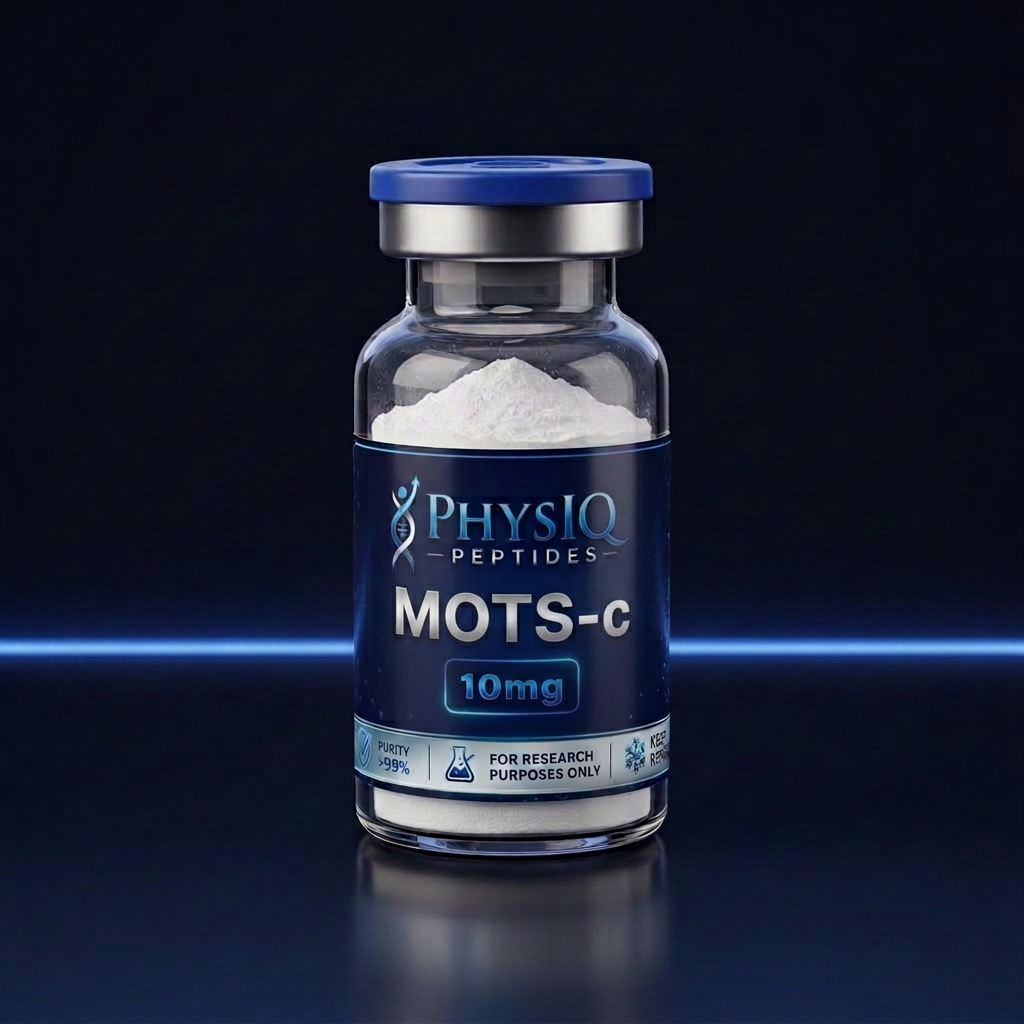
PhysIQ Peptides supplies MOTS-c as a lyophilized powder, third-party tested for purity and identity, for in vitro and laboratory research use only.
Select size
Choose how to buy
You save $1.95 every reship · ≈ $23.73 saved per year
Auto-delivered • Skip or cancel anytime • Never run out
Your first order ships at the regular price. Every reship after that is 5% off. Pause, change the interval, or cancel anytime.
- Purity
- 99%
- Form
- Powder (lyophilized)
- CAS Number
- 1627580-64-6
- Molecular Formula
- C101H152N28O22S2
- Molecular Weight
- 2174.59 g/mol
- Available sizes
- 10mg, 20mg
Sequence
Met-Arg-Trp-Gln-Glu-Met-Gly-Tyr-Ile-Phe-Tyr-Pro-Arg-Lys-Leu-Arg (MRWQEMGYIFYPRKLR)
Also available in blends
Mechanism of Action
In published cell and animal studies, MOTS-c inhibits the folate cycle and de novo purine synthesis, leading to accumulation of the metabolite AICAR and activation of AMPK. AMPK activation shifts cellular metabolism toward glucose uptake and fatty-acid oxidation, particularly in skeletal muscle models. Under stress, MOTS-c has been observed to translocate to the nucleus and regulate antioxidant-response genes.
Research Areas
- ●Mitochondrial-derived peptide biology
- ●AMPK and cellular energy sensing
- ●Skeletal muscle metabolism models
- ●Mitochondrial–nuclear communication
Selected References
- Lee C, et al. Cell Metab. 2015;21(3):443-454.
Related Products