Pinealon
Pinealon
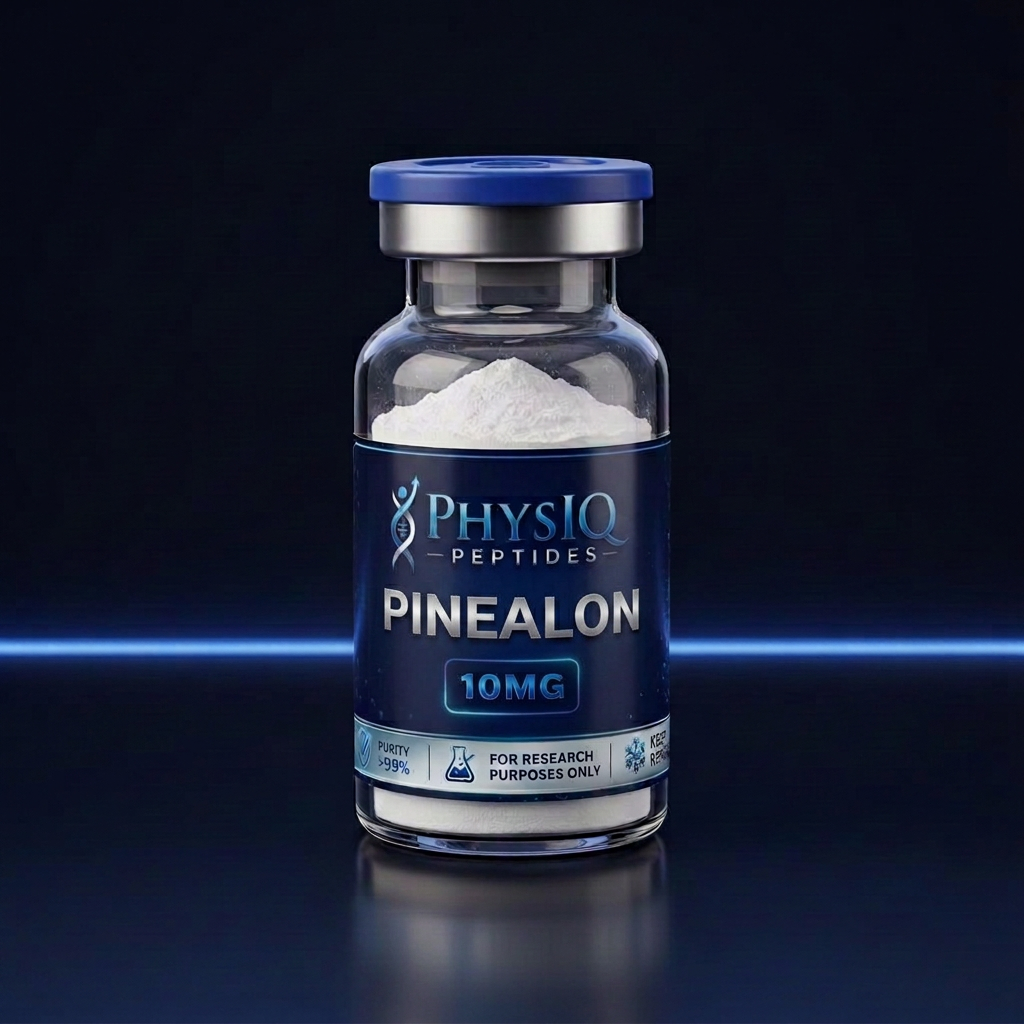
Pinealon is a synthetic short-chain peptide composed of three amino acid residues (L-glutamyl-L-arginyl-L-alanine) developed through peptide bioregulator research. It is structurally designed to mimic endogenous signaling molecules capable of penetrating cell membranes and interacting directly with nuclear chromatin to influence transcription and cellular viability. In preclinical research models, Pinealon has been extensively studied for its potential to alleviate oxidative stress, reduce apoptosis, and preserve mitochondrial function under conditions of hypoxia and metabolic deprivation. Its ultra-low molecular weight facilitates efficient uptake across cellular barriers, making it an important probe for neurodegenerative and cellular aging research. PhysIQ Peptides supplies high-purity Pinealon 10mg strictly for in vitro and in vivo scientific research purposes. This product is not intended for human consumption, clinical application, or veterinary use.
Choose how to buy
Subscribe & save 5% on reshipsYour first order ships at the regular price. Every reship after that is 5% off. Pause, change the interval, or cancel anytime.
- Purity
- ≥99%
- Form
- Lyophilized powder
- CAS Number
- 147285-88-9
- Molecular Formula
- C14H26N6O6
- Molecular Weight
- 374.39 g/mol
- Available sizes
- 10mg
Sequence
H-Glu-Arg-Ala-OH
Mechanism of Action
Pinealon exerts its effects primarily through the epigenetic modulation of gene expression associated with cellular survival, antioxidant defense, and neurotransmission. Research suggests that it enters the cell nucleus and interacts with DNA sequences, upregulating the transcription of protective antioxidant enzymes such as superoxide dismutase (SOD) and catalase, while suppressing pro-apoptotic pathways including caspase-3 activation. Furthermore, experimental data indicate that Pinealon helps maintain mitochondrial membrane potential and downregulates reactive oxygen species (ROS) generation under excitotoxic and hypoxic conditions, contributing to structural and functional preservation in neural tissue models.
Research Areas
- ●Neuroprotection and cerebral ischemia research
- ●Oxidative stress and reactive oxygen species (ROS) mitigation
- ●Gene expression and chromatin remodeling in neural tissue
- ●Mitochondrial stability and caspase-3 apoptosis suppression
- ●Cellular aging and senescence modeling
Selected References
- Khavinson VK, et al. Neuroendocrinol Lett. 2011;32(3):282-288.
- Kozina LS, et al. Bull Exp Biol Med. 2012;153(5):748-751.
- Morgunov SY, et al. Adv Gerontol. 2017;30(4):517-522.
Related Products