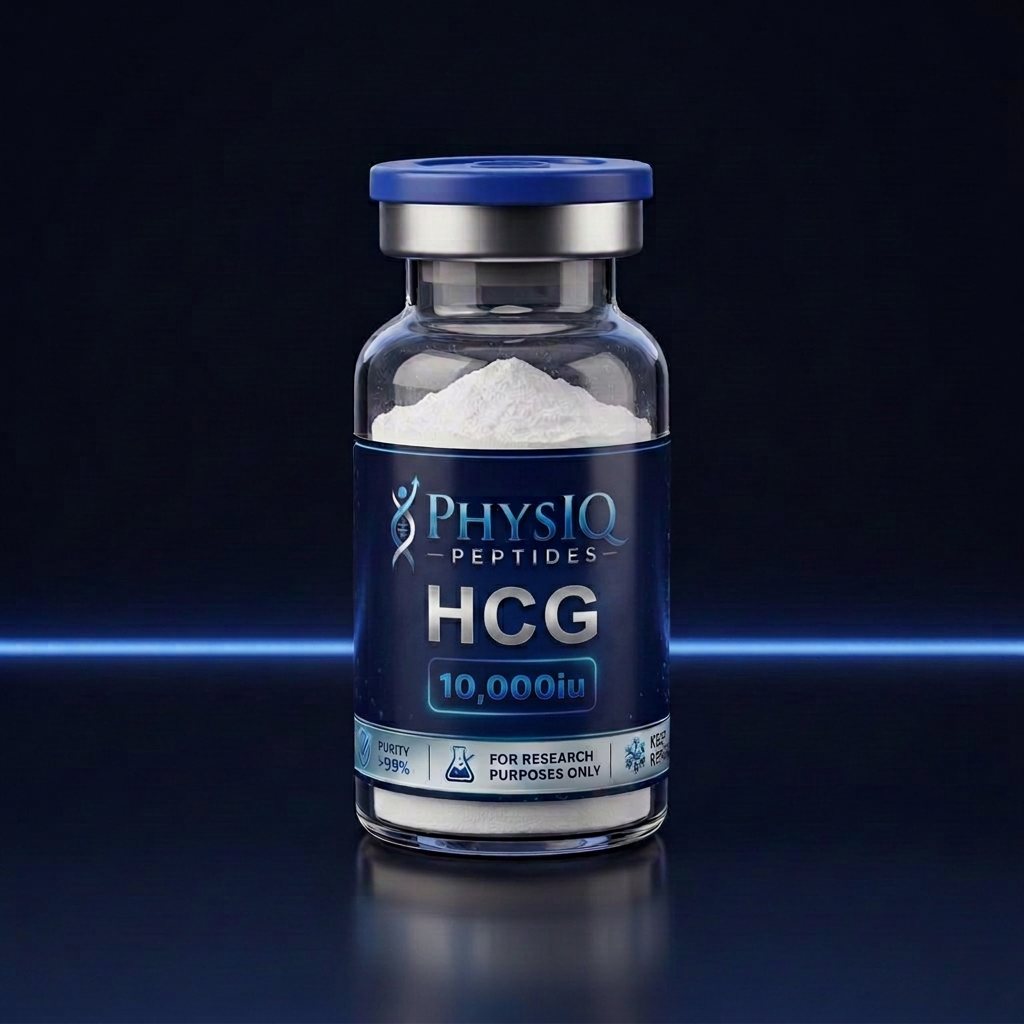
HCG
Human Chorionic Gonadotropin (10,000 IU)
Human Chorionic Gonadotropin (HCG) is a complex glycoprotein hormone structurally composed of two non-covalently linked subunits, designated alpha and beta. While the alpha subunit shares structural homology with other pituitary gonadotropins such as luteinizing hormone (LH), follicle-stimulating hormone (FSH), and thyroid-stimulating hormone (TSH), the beta subunit is unique and dictates receptor specificity. In physiological systems, HCG is primarily produced by placental syncytiotrophoblasts, playing a critical role in maternal-fetal endocrine signaling. In laboratory research environments, HCG is widely utilized as a potent tool to examine reproductive endocrinology, receptor-ligand interactions, and steroidogenic cascades. Due to its extended half-life relative to endogenous LH, HCG serves as a reliable and stable experimental agonist for studying downstream cellular processes in both male and female gonadal tissue models.
Choose how to buy
Subscribe & save 5% on reshipsYour first order ships at the regular price. Every reship after that is 5% off. Pause, change the interval, or cancel anytime.
- Purity
- ≥99%
- Form
- Lyophilized powder
- CAS Number
- 9002-61-3
- Molecular Weight
- ~36.7 kDa
- Available sizes
- 10,000iu
Sequence
Heterodimer: Alpha subunit (92 aa) and Beta subunit (145 aa)
Mechanism of Action
HCG exerts its biological activity through high-affinity binding to the G-protein coupled luteinizing hormone/choriogonadotropin receptor (LHCGR). Receptor activation stimulates the Gαs subunit, leading to the upregulation of adenylyl cyclase and a subsequent elevation of intracellular cyclic adenosine monophosphate (cAMP) levels. This cascade activates protein kinase A (PKA), triggering the phosphorylation of transcription factors and target proteins involved in steroidogenesis. In experimental cellular models, LHCGR activation via HCG promotes the transcription of steroidogenic acute regulatory (StAR) protein and cytochrome P450 enzymes. In Leydig cell models, this downstream signaling facilitates the conversion of cholesterol into downstream androgens, whereas in ovarian cell cultures, it stimulates follicular maturation, corpus luteum maintenance, and progesterone biosynthesis.
Research Areas
- ●Reproductive Endocrinology
- ●LHCGR Signaling and Internalization
- ●Steroidogenesis and StAR Protein Modulation
- ●Gonadal Cellular Proliferation and Apoptosis
- ●Placental Biology and Angiogenesis Models
Selected References
- Ascoli M, Fanelli F, Segaloff DL. The lutropin/choriogonadotropin receptor, a 2002 perspective. Endocr Rev. 2002;23(2):141-174.
- Choi J, Smitz J. Luteinizing hormone and human chorionic gonadotropin: origins of difference. Mol Cell Endocrinol. 2014;385(1-2):56-65.
- Fournier T. Human chorionic gonadotropin: Different glycoforms and sites of production functional diversity. Mol Cell Endocrinol. 2016;436:255-264.
Related Products