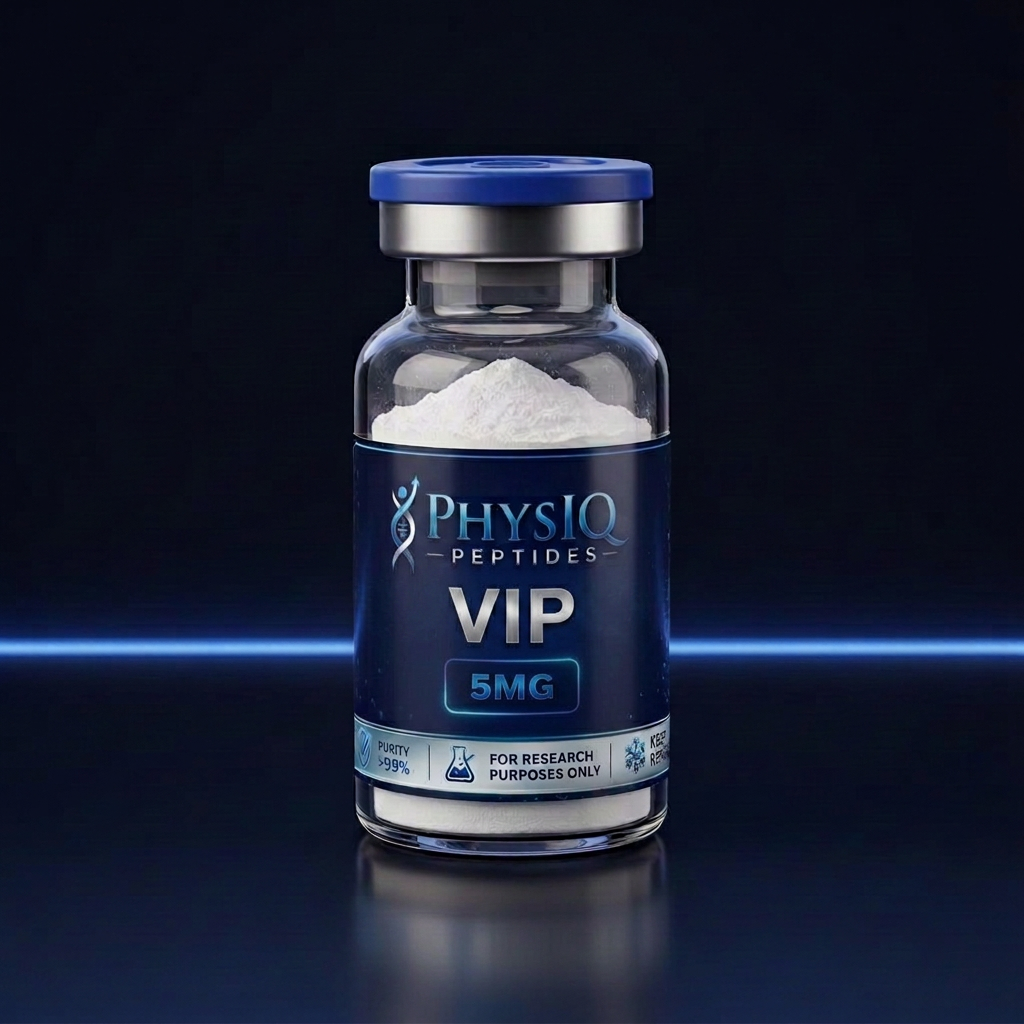
VIP
Vasoactive Intestinal Peptide
Vasoactive Intestinal Peptide (VIP) is a naturally occurring 28-amino acid polypeptide structurally belonging to the glucagon/secretin superfamily. Originally identified in the gastrointestinal tract, VIP is synthesized throughout the central and peripheral nervous systems, functioning as a non-adrenergic, non-cholinergic neurotransmitter and neuroendocrine signaling molecule. In preclinical research models, VIP is widely investigated for its pleiotropic regulatory effects across multiple physiological systems. Scientific focus often centers on its role in modulating smooth muscle relaxation, maintaining epithelial barrier integrity, promoting microvascular perfusion, and attenuating excessive immune responses. Its widespread receptor distribution makes VIP a key subject in cellular signaling and homeostatic regulation studies.
Choose how to buy
Subscribe & save 5% on reshipsYour first order ships at the regular price. Every reship after that is 5% off. Pause, change the interval, or cancel anytime.
- Purity
- ≥99%
- Form
- Lyophilized powder
- CAS Number
- 40077-57-4
- Molecular Formula
- C147H237N43O43S
- Molecular Weight
- 3325.80 g/mol
- Available sizes
- 10mg
Sequence
HSDAVFTDNYTRLRKQMAVKKYLNSILN-NH2
Mechanism of Action
VIP exerts its biological actions primarily through activation of two high-affinity class B G-protein-coupled receptors: VPAC1 and VPAC2, with lower affinity binding to the PAC1 receptor. Upon ligand binding, these receptors couple to Gαs proteins to stimulate adenylate cyclase, driving an intracellular accumulation of cyclic adenosine monophosphate (cAMP) and subsequent activation of protein kinase A (PKA). This signaling cascade initiates downstream cellular responses, including the phosphorylation of key regulatory proteins, relaxation of vascular and airway smooth muscle cells, and inhibition of NF-κB transcription. Consequently, VIP signaling suppresses the release of pro-inflammatory cytokines such as TNF-α and IL-6 while upregulating anti-inflammatory mediators in experimental cellular assays.
Research Areas
- ●Pulmonary arterial and airway smooth muscle dynamics
- ●Immunomodulation and macrophage phenotypic regulation
- ●Neuroprotection and central nervous system signaling
- ●Gastrointestinal mucosal integrity and motility
- ●Circadian biology and hypothalamic signaling
Selected References
- Said SI, Mutt V. Eur J Biochem. 1972;28(2):199-204.
- Delgado M, Ganea D. Pharmacol Rev. 2004;56(2):249-270.
- Harmar AJ, et al. Br J Pharmacol. 2012;166(1):4-17.
Related Products