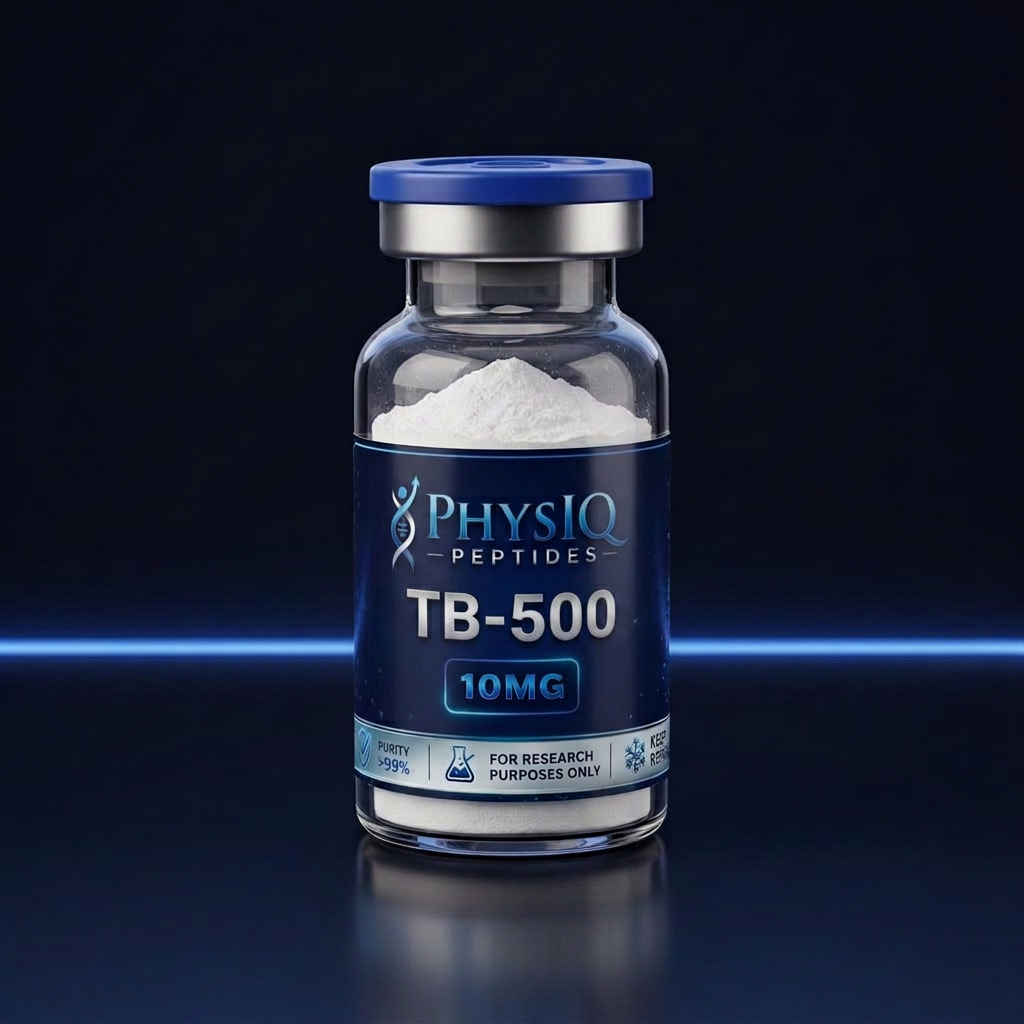
TB-500
TB-500 (Thymosin β4 17-23 fragment, Ac-LKKTETQ)
TB-500 is a synthetic, N-terminally acetylated heptapeptide, Ac-Leu-Lys-Lys-Thr-Glu-Thr-Gln, corresponding to residues 17-23 of thymosin beta-4 (Tβ4). Thymosin beta-4 is a 43-amino-acid protein found in high concentrations in nearly all cells, especially platelets and white blood cells, where it is the main protein that binds and stores monomeric actin.
The LKKTETQ sequence sits in the central actin-binding region of thymosin beta-4 and is the part of the protein most associated with its effects on cell migration, a process that depends on actin remodeling. Using this short fragment rather than the full 43-residue protein lets researchers study that actin-binding activity with a much smaller, simpler molecule. A 2005 Trends in Molecular Medicine review by Goldstein, Hannappel and Kleinman summarizes work in cell and animal models on thymosin beta-4's roles in wound repair, angiogenesis and inflammation.
PhysIQ Peptides supplies TB-500 as a lyophilized powder, third-party tested for purity and identity, for in vitro and laboratory research use only.
Choose how to buy
You save $2.90 every reship · ≈ $35.28 saved per year
Auto-delivered • Skip or cancel anytime • Never run out
Your first order ships at the regular price. Every reship after that is 5% off. Pause, change the interval, or cancel anytime.
- Purity
- 99%
- Form
- Powder (lyophilized)
- CAS Number
- 885340-08-9
- Molecular Formula
- C38H68N10O14
- Molecular Weight
- 889.02 g/mol
- Available sizes
- 10mg
Sequence
Ac-Leu-Lys-Lys-Thr-Glu-Thr-Gln (Ac-LKKTETQ)
Mechanism of Action
The LKKTETQ motif is the actin-binding domain of thymosin beta-4, which sequesters monomeric G-actin and regulates the pool available for filament assembly. By influencing actin polymerization, the fragment is studied for its effects on cell motility and migration. Published research on thymosin beta-4 and this region also reports effects on endothelial cell migration and angiogenesis in repair models.
Research Areas
- ●Actin sequestration and cytoskeletal dynamics
- ●Cell migration models
- ●Wound repair and angiogenesis research
- ●Inflammation and tissue injury models
Selected References
- Goldstein AL, Hannappel E, Kleinman HK. Trends Mol Med. 2005;11(9):421-429.
Related Products