 New Exclusive Blend
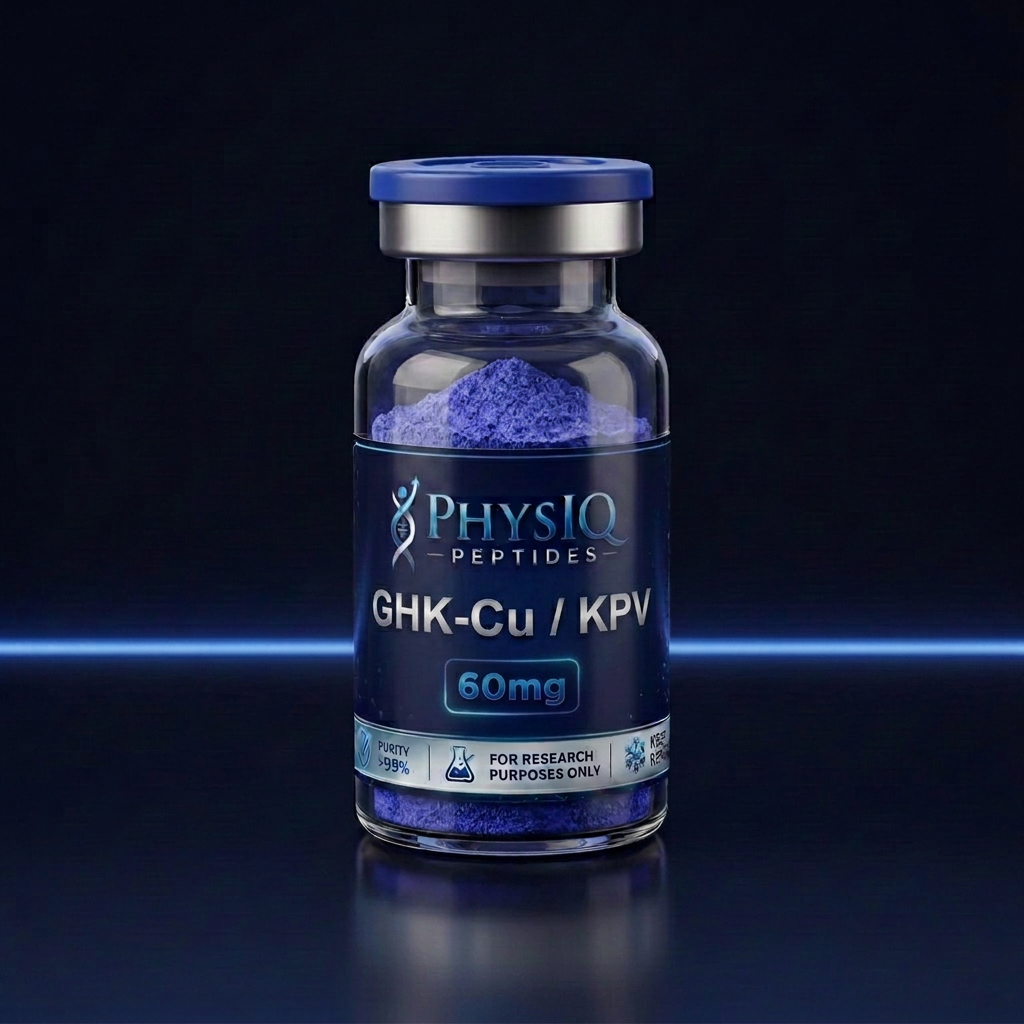
GHK-Cu / KPV
GHK-Cu / KPV Peptide Blend
GHK-Cu / KPV is a specialized research blend uniting two potent, naturally derived tripeptides. GHK-Cu (glycyl-L-histidyl-L-lysine copper complex) is widely investigated for its ability to regulate extracellular matrix remodeling, stimulate collagen and glycosaminoglycan synthesis, and modulate genes involved in cellular defense and regeneration. KPV is a C-terminal tripeptide derived from alpha-melanocyte-stimulating hormone (α-MSH). In laboratory settings, KPV demonstrates potent anti-inflammatory properties without triggering melanogenesis, primarily via down-regulation of pro-inflammatory cytokines and inhibition of nuclear factor kappa B (NF-κB) activation in epithelial and immune cells. By combining GHK-Cu and KPV, this experimental formulation allows investigators to study the complementary mechanisms of accelerated tissue remodeling, inflammatory pathway mitigation, and cellular barrier restoration in various in vitro and in vivo models. All units are intended solely for laboratory research purposes.
Choose how to buy
Subscribe & save 5% on reshipsYour first order ships at the regular price. Every reship after that is 5% off. Pause, change the interval, or cancel anytime.
- Purity
- ≥99%
- Form
- Lyophilized powder
- CAS Number
- 49557-75-7 / 67727-97-3
- Molecular Formula
- C14H22CuN6O4 / C16H31N3O4
- Molecular Weight
- 401.91 g/mol / 345.44 g/mol
- Available sizes
- 60mg
Sequence
Gly-His-Lys(Cu2+) / Lys-Pro-Val
Mechanism of Action
GHK-Cu functions at the molecular level by upregulating extracellular matrix components such as collagen, elastin, and proteoglycans, while restoring balance between matrix metalloproteinases (MMPs) and their tissue inhibitors (TIMPs). It also participates in anti-oxidative pathways and copper delivery essential for enzymatic remodeling processes. KPV acts intracellularly to suppress the activation and nuclear translocation of NF-κB, thereby decreasing the transcription of inflammatory mediators including TNF-α, IL-1β, and IL-6. Together, the blend provides a multi-targeted framework for evaluating combined structural repair and inflammatory control in tissue models.
Research Areas
- ●Extracellular Matrix Remodeling
- ●Anti-Inflammatory Signaling Pathways
- ●Dermal and Epithelial Regeneration
- ●Wound Healing Kinetics
- ●Cellular Antioxidant Defense
Selected References
- Pickart L, Margolina A. Oxid Med Cell Longev. 2018;2018:6481087.
- Catania A, Gatti S, Colombo G, Lipton JM. Front Biosci. 2004;9:1315-1326.
- Dal Farra C, Domloge N. J Invest Dermatol. 2006;126(s4):S89.
Related Products