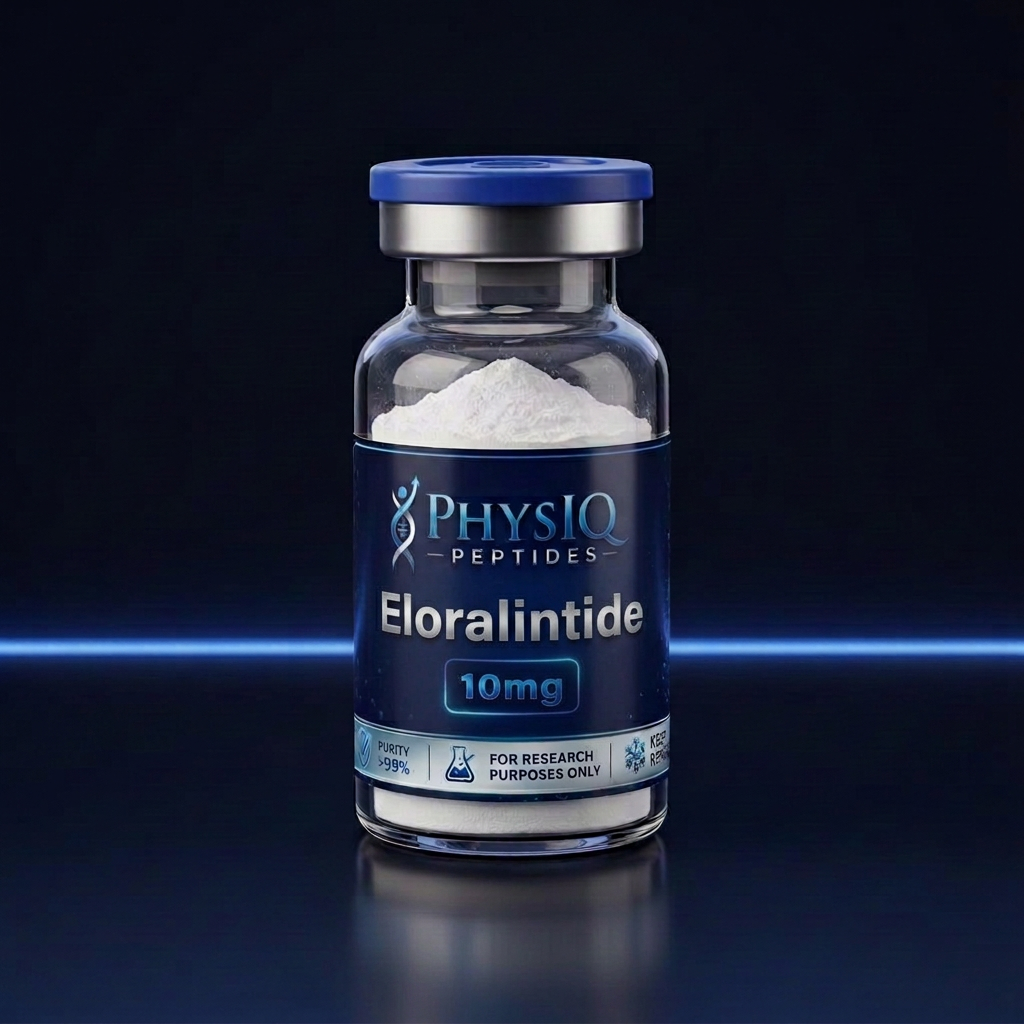
Eloralintide
Eloralintide
Eloralintide is an investigational, long-acting peptide analog designed to mimic the bioactivity of endogenous amylin while exhibiting enhanced structural stability and pharmacokinetic properties. Native amylin is a 37-amino-acid neuroendocrine hormone co-secreted with insulin by pancreatic beta cells, functioning as a physiological regulator of nutrient influx and satiety. Due to the rapid clearance and high propensity of native amylin to form insoluble amyloid fibrils, researchers utilize optimized analogs such as Eloralintide to facilitate sustained experimental observation. Structural modifications in Eloralintide prevent self-aggregation, allowing for reproducible in vitro and in vivo studies of amylin receptor pharmacology. In experimental models, Eloralintide serves as a high-affinity research tool to examine central and peripheral mechanisms governing metabolic homeostasis, body composition modulation, and neuroendocrine signaling networks. All materials are provided exclusively for scientific laboratory evaluation.
Choose how to buy
Subscribe & save 5% on reshipsYour first order ships at the regular price. Every reship after that is 5% off. Pause, change the interval, or cancel anytime.
- Purity
- ≥99%
- Form
- Lyophilized powder
- Available sizes
- 10mg
Mechanism of Action
Eloralintide functions as an agonist at amylin receptors (AMYRs), which are formed by heterodimerization of the calcitonin receptor (CTR) core with one of three Receptor Activity-Modifying Proteins (RAMP1, RAMP2, or RAMP3). Activation of these receptor complexes stimulates intracellular cyclic adenosine monophosphate (cAMP) generation and engages downstream kinase cascades. In preclinical research models, receptor binding in circumventricular organs, particularly the area postrema and the nucleus of the solitary tract, leads to the modulation of central satiety circuits and the deceleration of gastric motility. These signaling events allow researchers to systematically interrogate the molecular pathways controlling appetite suppression, energy expenditure, and glucose-dependent regulatory feedback.
Research Areas
- ●Amylin receptor subtype pharmacology
- ●Central neuroendocrine satiety pathways
- ●Gastric transit and nutrient absorption kinetics
- ●Metabolic homeostasis and energy balance models
- ●Comparative peptide stabilization research
Selected References
- Hay DL et al., Pharmacol Rev (2015)
- Bower RL et al., Br J Pharmacol (2014)
- Roth JD et al., Peptides (2012)
Related Products