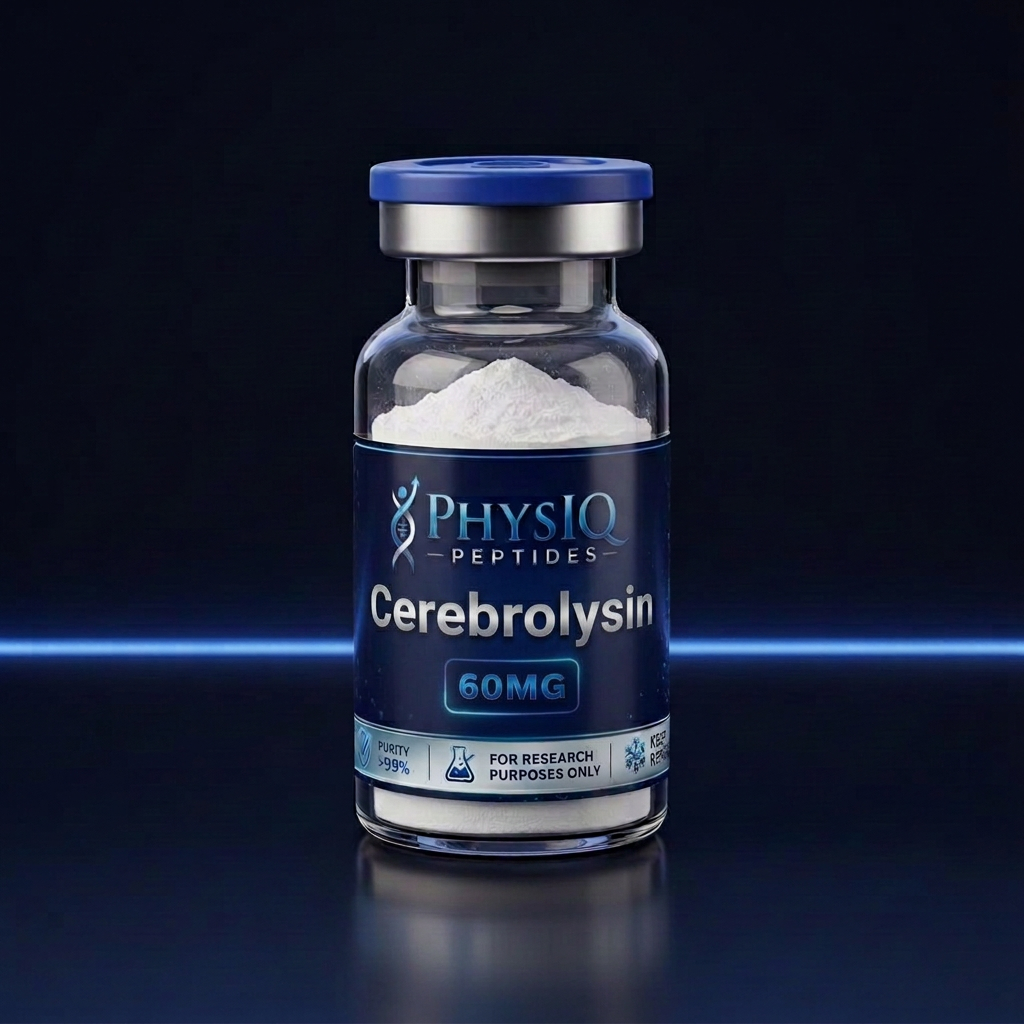
Cerebrolysin
Cerebrolysin Brain-Derived Neuropeptide Complex
Cerebrolysin is a low-molecular-weight peptide preparation derived from purified porcine brain proteins, comprising a complex mixture of active neurotrophic peptides and amino acids. It functionally mimics the biological actions of endogenous neurotrophic factors, including brain-derived neurotrophic factor (BDNF), glial cell line-derived neurotrophic factor (GDNF), nerve growth factor (NGF), and ciliary neurotrophic factor (CNTF). In preclinical research, Cerebrolysin is frequently evaluated in models of neurodegenerative conditions, acute ischemic stroke, and traumatic brain injury. Its multi-target mechanism allows researchers to examine cellular survival, blood-brain barrier integrity, and microglial regulation under conditions of metabolic and oxidative stress. Laboratory models utilize Cerebrolysin to study mechanisms of neurogenesis, synaptogenesis, and dendritic sprouting. It serves as an essential tool in neurobiology for exploring therapeutic avenues in neuronal repair and cognitive preservation.
Choose how to buy
Subscribe & save 5% on reshipsYour first order ships at the regular price. Every reship after that is 5% off. Pause, change the interval, or cancel anytime.
- Purity
- ≥99%
- Form
- Lyophilized powder
- CAS Number
- 12656-61-0
- Available sizes
- 60mg
Mechanism of Action
Cerebrolysin exerts multimodal biological effects by activating neurotrophic receptor signaling pathways, predominantly via the PI3K/Akt and MAPK/ERK cascades. This signaling leads to the upregulation of anti-apoptotic proteins like Bcl-2 and the downregulation of pro-apoptotic markers such as Bax and cleaved caspase-3, thereby preserving neuronal cell viability. Additionally, research demonstrates that Cerebrolysin reduces neuroinflammation by downregulating pro-inflammatory cytokine expression (e.g., TNF-α, IL-1β) and attenuates oxidative damage by enhancing endogenous antioxidant enzyme activity, supporting microvascular integrity and synaptic remodeling.
Research Areas
- ●Ischemic Stroke & Hypoxia Models
- ●Traumatic Brain Injury (TBI)
- ●Neurodegenerative Disease Research
- ●Synaptic Plasticity & Neurogenesis
- ●Neuroinflammation & Microglial Regulation
Selected References
- Bornstein NM, et al. Stroke. 2018.
- Alvarez XA, et al. J Neural Transm. 2011.
- Guekht A, et al. Int J Stroke. 2017.
Related Products