 New Exclusive Blend
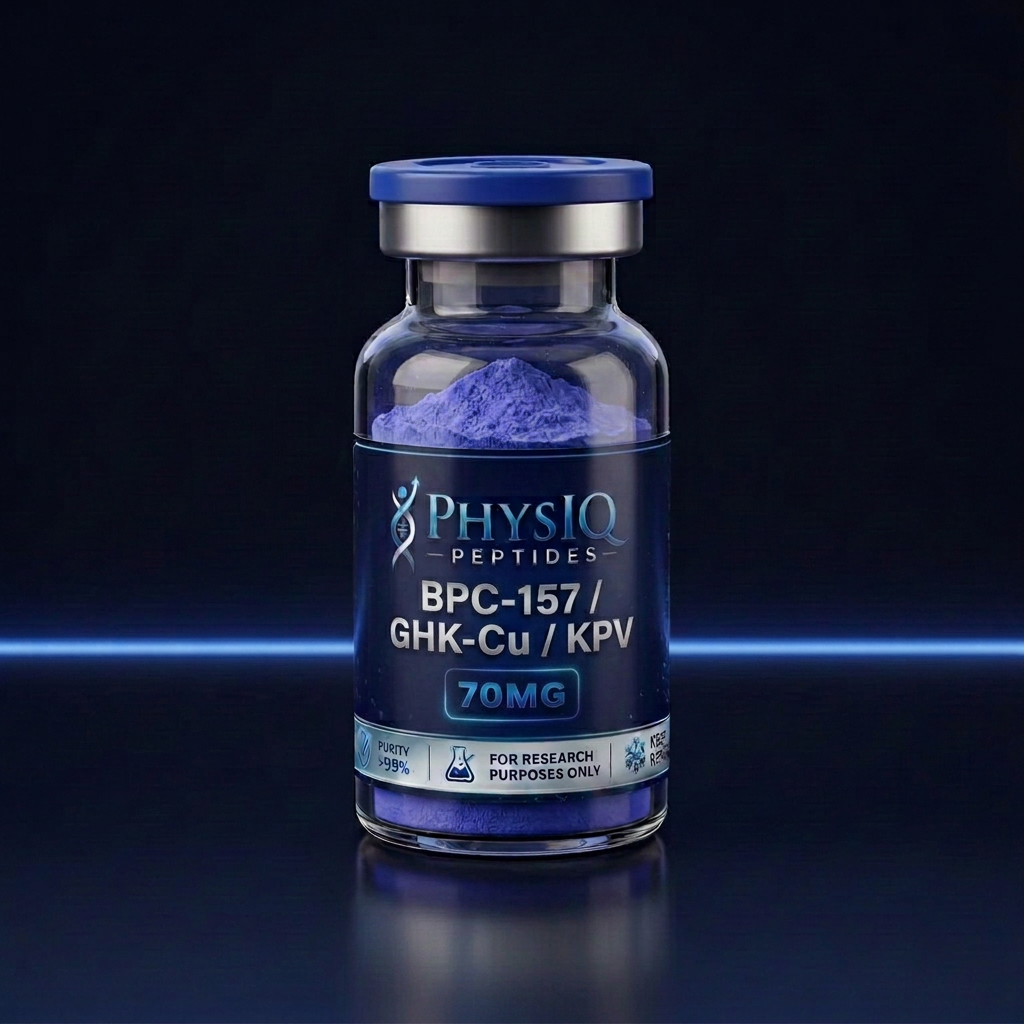
BPC-157 / GHK-Cu / KPV
BPC-157 / GHK-Cu / KPV Composite Blend (70mg)
The BPC-157 / GHK-Cu / KPV 70mg blend is a specialized multi-peptide research formulation engineered to investigate convergent cellular pathways governing tissue remodeling, angiogenic response, and inflammation attenuation. By pairing the stable gastric pentadecapeptide BPC-157 with the copper-binding tripeptide GHK-Cu and the alpha-MSH-derived tripeptide KPV, this complex provides investigators with an integrated tool to study regenerative mechanisms in in vitro and in vivo models. BPC-157 has been extensively cataloged for its cytoprotective and angiogenic profile, modulating growth factor expression and nitric oxide synthesis. GHK-Cu acts as a key biochemical regulator of extracellular matrix assembly, collagen synthesis, and gene expression linked to cellular repair. Complementing these actions, KPV operates as a potent modulator of nuclear factor kappa B (NF-κB) transcription, addressing inflammatory cascades at the cellular and mucosal level. This tri-peptide composite allows researchers to evaluate how distinct molecular pathways—spanning fibroblast stimulation, vascular endothelization, and cytokine suppression—can interact concurrently to facilitate holistic repair models in laboratory settings.
Choose how to buy
Subscribe & save 5% on reshipsYour first order ships at the regular price. Every reship after that is 5% off. Pause, change the interval, or cancel anytime.
- Purity
- ≥99%
- Form
- Lyophilized powder
- Available sizes
- 70mg
Mechanism of Action
BPC-157 exerts its biological activity in research models primarily by upregulating vascular endothelial growth factor (VEGF), modulating the FAK-paxillin pathway, and promoting early growth response 1 (Egr-1) gene expression, which drives cellular migration, angiogenesis, and collagen reorganization. Concurrently, GHK-Cu complexes with copper ions to stimulate fibroblast migration, upregulate matrix metalloproteinases (MMPs) and their tissue inhibitors (TIMPs), and enhance the expression of collagen, elastin, and glycosaminoglycans. KPV functions through intracellular peptide transporter 1 (PepT1) to enter target cells and inhibit the translocation of the NF-κB p65 subunit into the nucleus. This prevents the downstream transcription of major pro-inflammatory cytokines such as TNF-α, IL-1β, and IL-6. Together, these three peptides form a multifaceted biochemical network targeting structural rebuilding, microvascular restoration, and the down-regulation of destructive inflammatory pathways.
Research Areas
- ●Extracellular Matrix (ECM) Remodeling and Synthesis
- ●Angiogenesis and Microvascular Regeneration
- ●Fibroblast Migration and Wound Repair Kinetics
- ●NF-κB Pathway and Cytokine Modulation
- ●Mucosal and Epithelial Barrier Integrity
Selected References
- Sikiric P, et al. Current Pharmaceutical Design (2018)
- Pickart L, Margolina A. International Journal of Molecular Sciences (2018)
- Dalmasso G, et al. Gastroenterology (2008)
- Seiwerth S, et al. Journal of Physiology and Pharmacology (2014)
Related Products